
Chinese mini-excavators have become increasingly popular in construction, landscaping, agriculture, utility installation, and rental markets worldwide. Their compact size, hydraulic power, and relatively low operating costs make them a practical alternative to larger excavators for small and medium-sized projects.
But how does a Chinese mini-excavator actually work? What are its main components, and what should buyers consider when choosing a mini excavator from China?
In this guide, we explain how Chinese mini-excavators operate and why they are widely used in international markets.
What Is a Chinese Mini-Excavator?
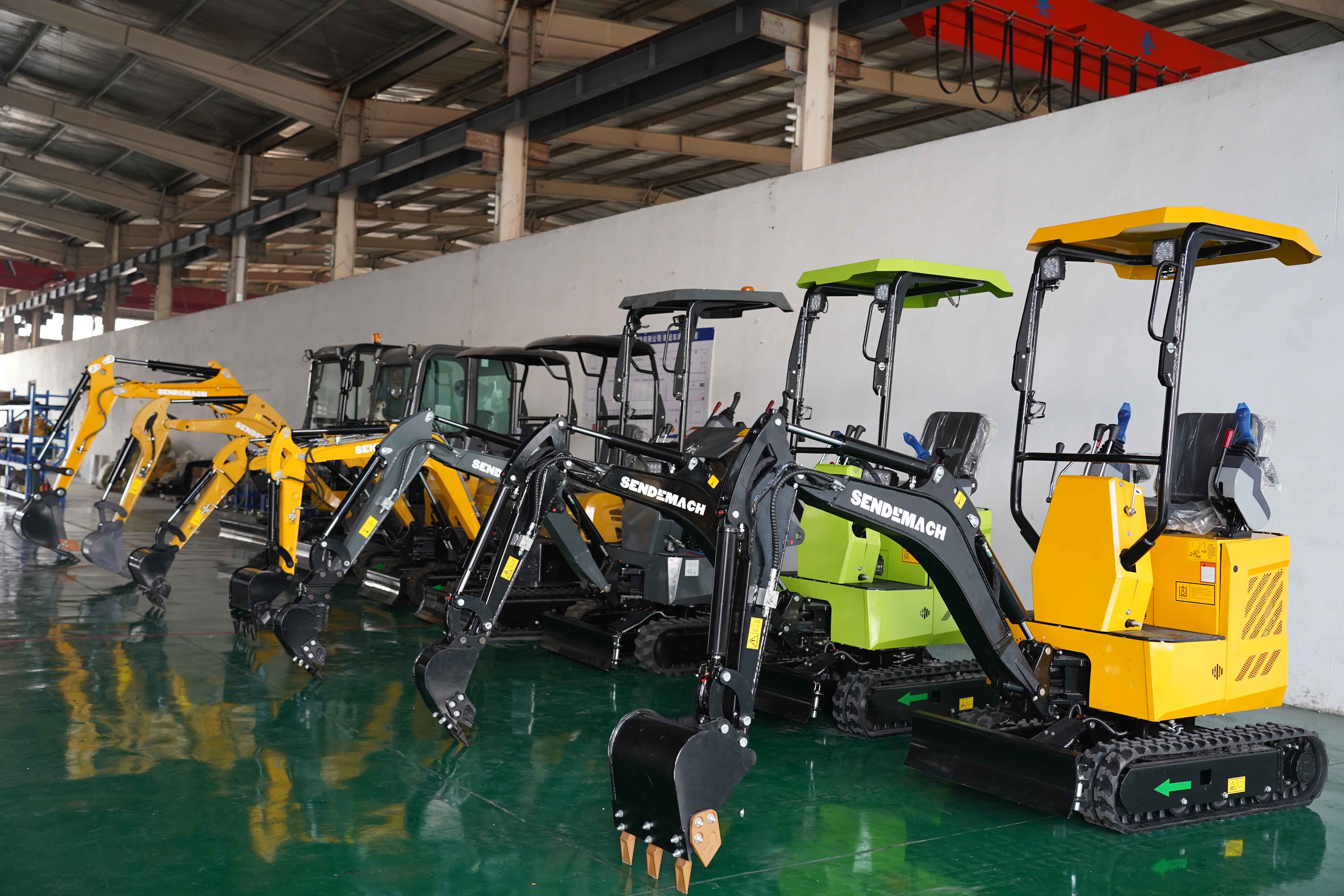
A Chinese mini-excavator is a compact hydraulic excavator manufactured in China. Depending on the model, operating weight typically ranges from around 1 ton to several tons.
Unlike large excavators, mini-excavators are designed for working in confined spaces such as residential construction sites, gardens, farms, narrow roads, and urban renovation projects.
Common applications include:
Digging trenches
Landscaping
Agricultural work
Foundation preparation
Drainage and utility installation
Demolition
Road maintenance
Tree and root removal
Material handling
Construction site preparation
The compact dimensions allow operators to work in areas where conventional excavators cannot easily access.
How Does a Mini-Excavator Work?
The basic operating principle of a mini-excavator is based on a diesel engine, hydraulic system, and mechanical structure.
The engine generates power, which is transferred to the hydraulic pump. The hydraulic pump pressurizes hydraulic oil and sends it through hydraulic valves to different actuators.
These hydraulic components control the:
Boom
Arm
Bucket
Swing system
Travel motors
Auxiliary hydraulic attachments
When the operator moves a joystick, the hydraulic control system directs pressurized oil to the appropriate hydraulic cylinder or motor. This creates the movement required for digging, lifting, swinging, or traveling.
In simple terms:
Engine → Hydraulic Pump → Hydraulic Valves → Hydraulic Cylinders/Motors → Working Attachments
This hydraulic design gives mini-excavators considerable digging power despite their compact size.
Main Components of a Chinese Mini-Excavator
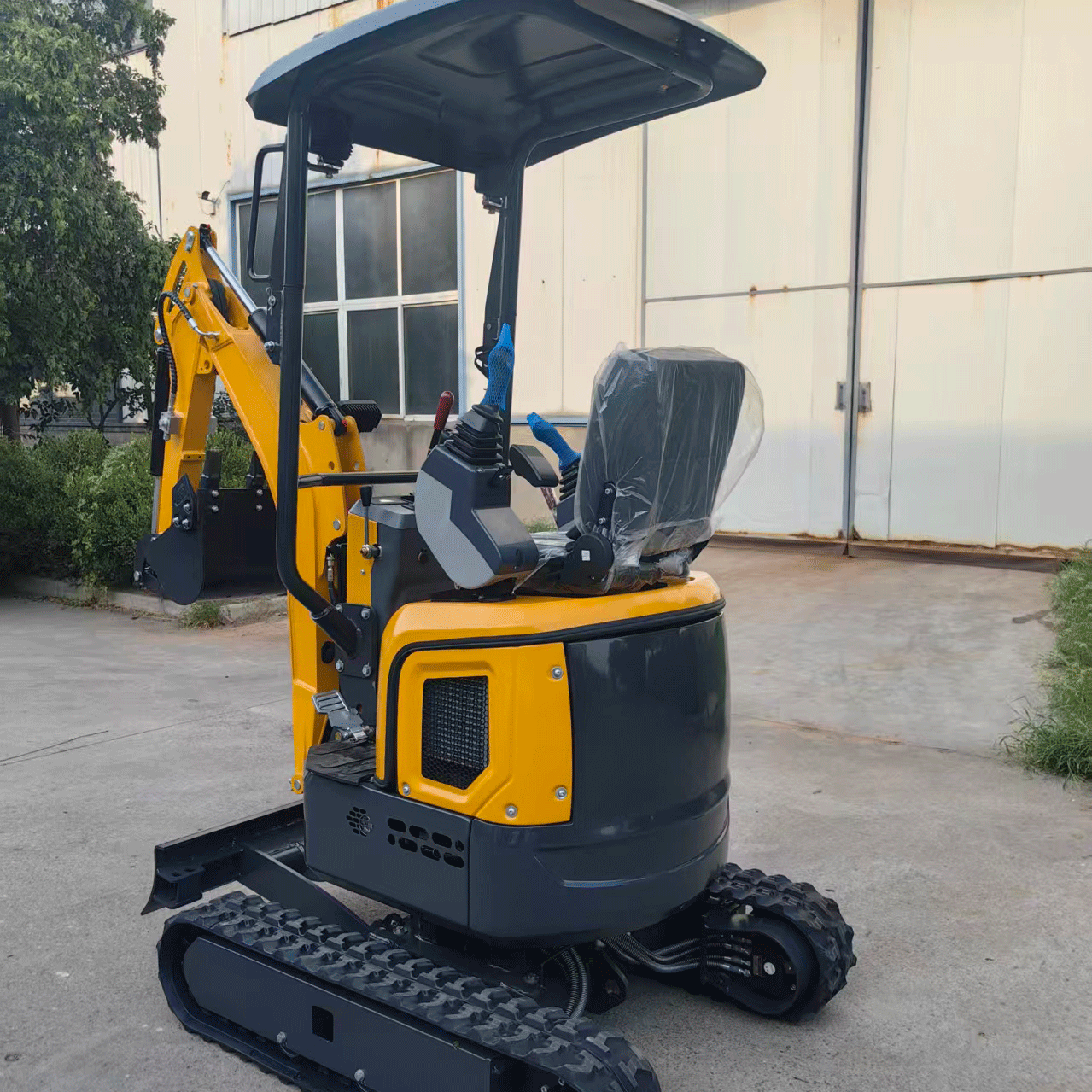
Understanding the main components is important when comparing different Chinese mini-excavator manufacturers.
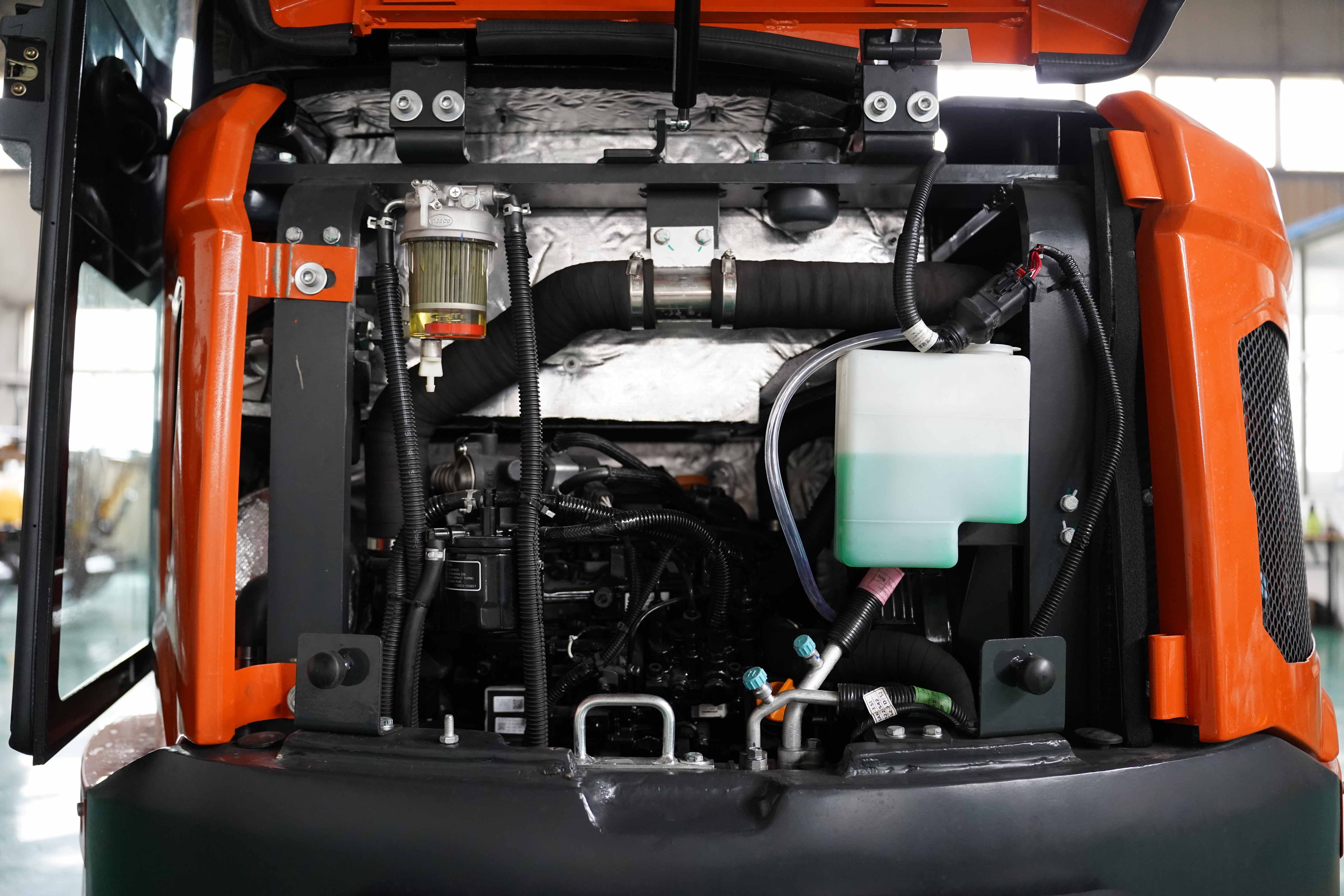
1. Diesel Engine
The engine provides the primary power source for the machine.
Many Chinese mini-excavators use engines from established manufacturers such as Yanmar, Kubota, and other engine suppliers, depending on the model and target market.
For European buyers, engine emissions compliance is particularly important. Machines intended for the European market may need engines meeting applicable Stage V requirements.
2. Hydraulic Pump
The hydraulic pump converts mechanical engine power into hydraulic energy.
It supplies pressurized hydraulic oil to the control system, allowing the excavator to operate its boom, arm, bucket, swing motor, and travel motors.
The quality of the hydraulic pump can significantly affect:
Excavator response
Digging performance
Operating smoothness
Fuel efficiency
Long-term reliability
3. Hydraulic Control Valves
Hydraulic valves determine where the pressurized hydraulic oil goes.
When the operator moves the joystick, the hydraulic valve directs oil to a specific cylinder or motor.
For example, moving the joystick forward may cause the boom to lower, while another control movement can extend or retract the arm.
4. Hydraulic Cylinders
Hydraulic cylinders convert hydraulic pressure into mechanical movement.
Mini-excavators normally use cylinders for:
Boom movement
Arm movement
Bucket movement
Blade movement
The combination of hydraulic pressure and cylinder size determines much of the machine's digging and lifting capability.
5. Swing Motor
The swing motor allows the upper structure of the excavator to rotate.
This enables the operator to move the boom and bucket from one side of the machine to another without repositioning the entire machine.
6. Travel Motors
Travel motors drive the crawler tracks.
Most tracked mini-excavators use two travel motors, one for each side. By controlling the two motors independently, the operator can move forward, backward, or turn the machine.
Some mini-excavators also offer two-speed travel, allowing the operator to select a slower speed for difficult terrain and a faster speed for moving between work areas.
Why Are Mini-Excavators So Compact?
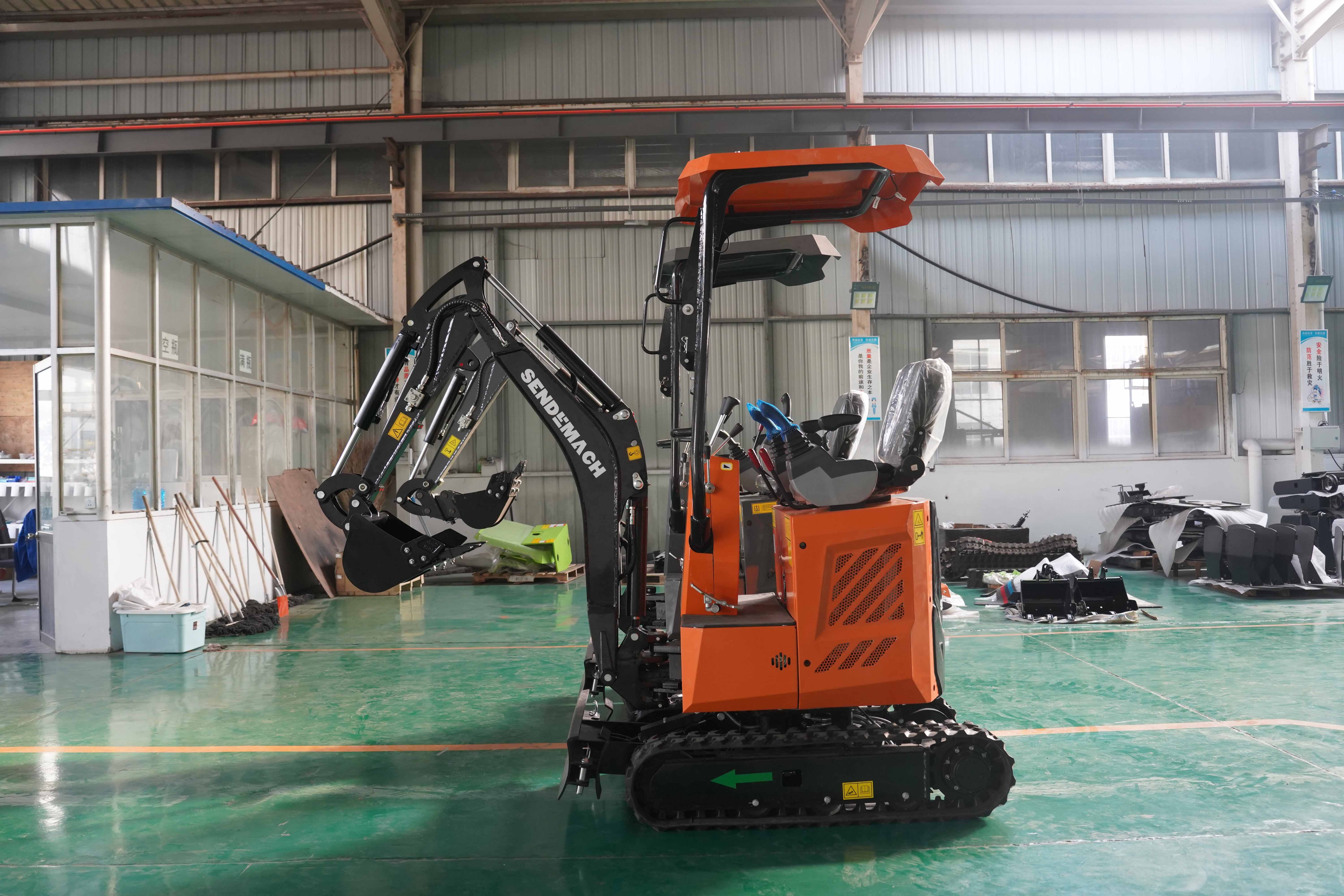
One of the biggest advantages of a mini-excavator is its compact design.
Many models are equipped with a narrow undercarriage or retractable tracks. This allows the machine to pass through narrow gates and work in restricted areas.
Some models also feature a zero-tail-swing or short-tail design, reducing the risk of the rear of the machine hitting walls, vehicles, or other obstacles while the upper structure rotates.
This makes compact excavators especially useful for:
Backyard construction
Residential renovation
Landscaping
Urban construction
Narrow access projects
Indoor or semi-indoor applications
How Do Mini-Excavator Attachments Work?
One advantage of hydraulic mini-excavators is their ability to use different attachments.
The standard bucket can be replaced or supplemented with attachments such as:
Hydraulic breakers
Augers
Hydraulic thumbs
Rippers
Grabs
Tilt buckets
Quick couplers
Vibratory plates
Hydraulic attachments use the machine's auxiliary hydraulic circuit to receive hydraulic flow from the excavator.
This means one mini-excavator can perform multiple types of work without requiring a separate machine for every task.
Are Chinese Mini-Excavators Reliable?
The answer depends largely on the manufacturer, component selection, quality control, and after-sales support.
The Chinese mini-excavator market includes a wide range of manufacturers. Some focus primarily on low-cost machines, while others manufacture machines for export markets with higher specifications and stricter quality requirements.
When purchasing a Chinese mini-excavator, buyers should look beyond the initial price.
Important factors include:
Engine
Check the engine manufacturer, emissions standard, spare-parts availability, and service network.
Hydraulic System
Ask about the hydraulic pump, control valve, travel motors, and swing motor brands.
Steel Structure
The boom, arm, undercarriage, and frame should be designed for the machine's operating weight and working conditions.
Quality Control
Ask the manufacturer about factory testing, inspection procedures, and machine testing before shipment.
Spare Parts
Reliable access to filters, hydraulic components, seals, electrical components, and other wearing parts is essential for long-term operation.
After-Sales Support
For international buyers, technical support and spare-parts supply can be just as important as the initial purchase price.
Chinese Mini-Excavator vs. Used Japanese or European Machines
Buyers often compare a new Chinese mini-excavator with a used machine from Japan or Europe.
There is no single answer for every application.
A used premium-brand excavator may offer proven durability and a strong local service network. However, it may also have significant operating hours and require maintenance or component replacement.
A new Chinese mini-excavator can offer:
New-machine condition
Competitive purchase price
Modern specifications
Customization options
Multiple attachment choices
Direct factory purchasing
OEM branding opportunities
For dealers and rental companies, the combination of purchase price, equipment specifications, warranty, spare parts, and long-term operating costs should be considered together.
What Should You Check Before Buying a Mini-Excavator from China?
Before ordering a mini excavator from China, international buyers should ask the manufacturer for detailed technical information.
A good checklist includes:
Operating weight
Engine brand and model
Engine emissions standard
Hydraulic system specifications
Maximum digging depth
Maximum digging height
Maximum dumping height
Bucket capacity
Maximum digging force
Travel speed
Swing speed
Overall dimensions
Track width
Auxiliary hydraulic flow
Warranty terms
Spare-parts availability
CE documentation when applicable
Factory inspection and testing procedures
For European customers, it is especially important to confirm that the machine configuration and documentation are suitable for the intended market.
Why Buy Chinese Mini-Excavators?
China has developed a large manufacturing ecosystem for construction equipment. Buyers can find mini-excavators covering different weight classes, engine configurations, hydraulic systems, and attachment options.
For distributors and importers, Chinese manufacturers can also provide OEM and customized configurations, allowing machines to be produced according to specific market requirements.
However, the lowest price should not be the only purchasing criterion.
A reliable supplier should be able to provide:
Competitive pricing + quality components + factory testing + documentation + spare parts + after-sales support
Final Thoughts
Chinese mini-excavators work on the same fundamental hydraulic principles as excavators manufactured in Europe, Japan, Korea, and other countries.
The engine powers the hydraulic pump, the hydraulic system distributes pressurized oil, and hydraulic cylinders and motors convert that energy into digging, lifting, swinging, and traveling movements.
For buyers considering a Chinese mini-excavator, the most important question is not simply “How cheap is the machine?” but rather:
“What components, quality standards, support, and long-term value am I getting for the price?”
By carefully evaluating the engine, hydraulic system, structural components, attachments, certification, warranty, spare parts, and manufacturer support, buyers can make a much more informed decision when sourcing mini-excavators from China.